ERPNext vs Traditional ERPs:What You’re Missing Without Open Source
The moment you choose open source, you choose freedom - not limits.


When businesses compare ERPs, they usually look at features, pricing, or brand names.
But the real difference is deeper:
Traditional ERPs make you adjust to their world.
Open-source ERPNext adjusts to yours.
Why Traditional ERPs Hold You Back
Traditional ERPs look strong from the outside. But once you start working with them, the cracks show immediately.
What slows you down:

Costly licenses
Paid per-user models
Long implementation cycles
Heavy systems that need big IT teams
Complex workflows you cannot change
Any customization = time + approval + money
Vendor lock-in for every small upgrade
Traditional ERPs give you control - but with conditions.
What Open Source (ERPNext) Unlocks Instantly
“Open source isn’t about saving money. It’s about saving your freedom.”
ERPNext gives you everything traditional ERPs do - plus everything they can’t.
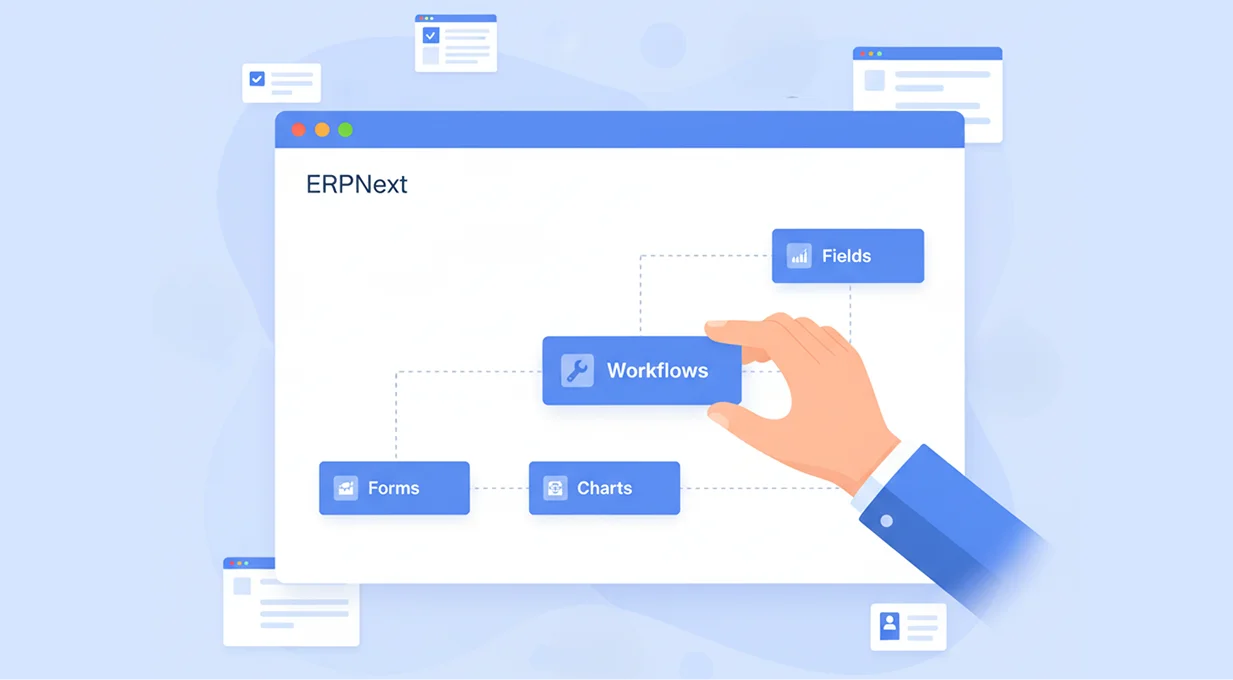
Unlimited Flexibility

Change forms, workflows, print formats, reports - easily.
Low-Code / No-Code (Anyone Can Build)
Drag-and-drop customization
Form builder
Report builder
Report builder
Automation rules
Notification rules
You don’t need a developer for everyday changes.
Easy to Learn, Easy to Use
Your team doesn’t need technical background.
ERPNext is clean, modern, and intuitive.
Learn Anytime - Zero Barrier
Thousands of YouTube tutorials
Step-by-step blogs
Massive community forum
Active Discord + social groups
Real examples from real companies
Even non-tech users learn it in days.
Real-Time Everything
Stock, sales, accounting, production, projects - live.
No waiting for reports. No guesswork.
Open API = Integrate Anything
Website, app, POS, CRM, marketplace - all connect easily.
Fast Implementation (Weeks, Not Years)
Cloud-ready, lightweight, modern structure.
Cost Advantage That Grows With You
No licensing
No limit on users
No forced upgrades
The Simple Comparison
See the difference. Make the decision.
Factor
Traditional ERPs
ERPNext (Open-Source)
Factor
Licensing
Traditional ERPs
Expensive
ERPNext (Open-Source)
Free
Factor
Users
Traditional ERPs
Pay per user
ERPNext (Open-Source)
Unlimited
Factor
Customization
Traditional ERPs
Slow + costly
ERPNext (Open-Source)
Easy + low-code
Factor
Implementation
Traditional ERPs
Long
ERPNext (Open-Source)
Fast
Factor
Flexibility
Traditional ERPs
Limited
ERPNext (Open-Source)
Extreme
Factor
Learning
Traditional ERPs
Hard
ERPNext (Open-Source)
Simple
Factor
Support
Traditional ERPs
Vendor only
ERPNext (Open-Source)
Global community
Factor
Innovation
Traditional ERPs
Slow
ERPNext (Open-Source)
Continuous
Factor
Integrations
Traditional ERPs
Paid
ERPNext (Open-Source)
Open API
Factor
Ownership
Traditional ERPs
Vendor controls
ERPNext (Open-Source)
You control
One table shows the whole truth.
Power Features You Don’t Get in Most Traditional ERPs
ERPNext delivers modern tools built for fast-moving companies:

Low-code workflow engine

Auto email alerts

Intelligent dashboards

Drag-and-drop reports

Flexible Doctypes (custom data models)

Role-based permissions

Plug-in marketplace

Multi-company & multi-currency

Auto posting to accounts

Built-in POS

Built-in website & e-commerce

Free updates every few weeks
Most of these features cost extra in traditional ERPs - or don’t exist at all.
Scenarios That Make the Difference (Real-World Hits)
Need a new approval flow today?
Traditional ERP
Raise a request → Pay → Wait.
ERPNext
Add workflow → Go live → Same day.
Need a new field on a form?
Traditional ERP
Customization project.
ERPNext
Add custom field → Done.
Need a custom report?
Traditional ERP
Pay a consultant.
ERPNext
Report Builder → 5 minutes.
Want to scale your team?
Traditional ERP
More licenses = more cost.
ERPNext
Add unlimited users.
Need to experiment with a new process?
Traditional ERP
Slow, expensive, complicated.
ERPNext
Create → Test → Deploy - all in hours.
These small moments decide how fast a company can grow.
What You’re Actually Missing Without Open Source
Not just features - freedom.
You miss:
Freedom to customise instantly
Freedom to scale without cost pressure
Freedom from vendor dependency
Freedom to learn quickly
Freedom to innovate anytime
Freedom to connect any system
Freedom to control your own data
Freedom to grow at your speed
And most importantly: Freedom to run your business your way.
Decision Checklist (60 seconds)
Tick what applies:
Checked: 0
If you checked 4 or more, ERPNext is a strong fit.
If you checked 7 or more,You’re already losing efficiency and money.
FAQs (Simple Answers)
Yes. With proper cloud hosting, it’s extremely secure.
No. It’s more transparent and more flexible.
Most users become comfortable in 1–2 weeks.
Yes - full MRP, BOM, work orders, routing, QC, costing.
Usually 50–70% less than traditional ERPs.
Yes - via open API.
Final Line
“Open source isn’t about choosing a cheaper ERP. It’s about choosing a smarter future.”
ERPNext gives you the flexibility, speed, and power that modern companies need - without the cost and restrictions of traditional ERPs.
If you want a system that adapts to your business - not the other way around - ERPNext is the clear and practical choice.
Let’s Talk
Schedule a free consultation call with our experts to find out more about this incredible ERP platform.
Author

Mansi Brahmkhatri is a Techno-Functional Frappe & ERPNext Consultant skilled in analyzing business processes and developing custom applications that streamline operations. She is known for delivering efficient, end-to-end ERP solutions.
Share


Related post
ERPNext
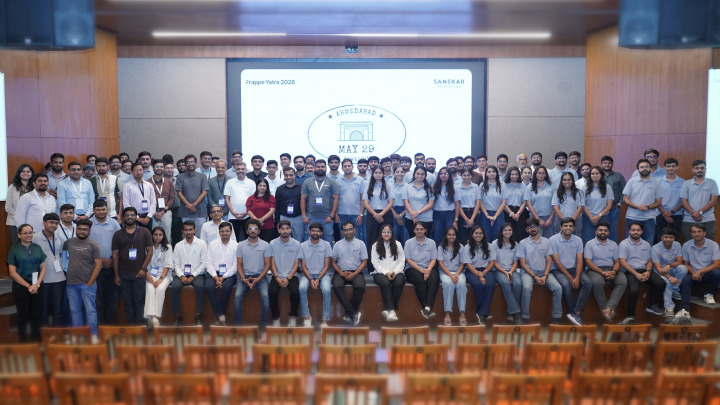
What Business Leaders Learned from Frappe Yatra Ahmedabad 2026
See how ERPNext, open source software, and automation help businesses standardize processes and improve decision-making.


2nd June, 2026

6 min read

ERPNext
The Real Cost of ERPNext Implementation in 2026
A Strategic Executive Briefing on TCO, ROI, and Operational Scalability

16th April, 2026
5 min read

ERPNext
ERPNext v16 Accounting: A CFO's: Upgrade Finance Book
A Strategic Deep Dive into Financial Control, Closing Efficiency, and Governance in ERPNext v16
17th February, 2026
5 min read


